






Home » Facial Fat Grafting
Facial aging doesn’t start with wrinkles. It starts with volume loss. As fat pads in the cheeks, temples, and under the eyes thin over time, the face can look tired, hollow, or less defined, even when skin quality remains strong. For many patients, injectable fillers offer a temporary fix, but they aren’t always the best long-term answer.
Facial fat grafting offers a different approach. Instead of relying on synthetic products that require ongoing maintenance, this procedure restores volume using your own fat. Each year, surgeons perform more than 34,000 facial fat grafting procedures, making it a well-established option for patients who want durable, natural-looking results.
When considering facial fat grafting, Baltimore patients turn to Dr. Adam Basner for precision and longevity. His conservative technique and deep understanding of facial anatomy allow him to restore volume in a way that holds up and looks intentional yet subtle.
Facial Fat Grafting, Explained
Facial fat grafting is a surgical procedure that restores volume to the face using your own fat. Instead of placing synthetic filler, Dr. Basner transfers fat from another area of your body and carefully reintroduces it into areas of the face that have lost structure or fullness over time.
The process begins with gentle liposuction to collect fat from a donor area, most often the abdomen, flanks, or thighs, which are most likely to store fat. Dr. Basner then purifies the fat and injects it into targeted facial regions using precise techniques designed to create soft, balanced volume.
This approach offers a unique dual benefit. You gain subtle contouring in the donor area while restoring volume where the face needs it most. Patients often appreciate that facial fat grafting addresses two concerns at once—refining body shape and rebuilding facial structure—without introducing foreign material.
For patients seeking a facial fat transfer, Baltimore plastic surgeon Dr. Basner replaces what time has taken away and restores proportion in a way that looks and feels authentic.
Who Benefits From Facial Fat Transfer?
Facial fat transfer is for patients who want to restore fullness, not just fill lines. While injectable fillers can temporarily soften fine lines or add minor volume, fat grafting works on a larger scale. It replenishes the deeper support structures of the face, creating smoother transitions and longer-lasting contour.
This procedure is ideal for:
- Women and men over 30 who have started to lose facial volume with age
- Individuals with hollow cheeks, sunken temples, or under-eye depressions
- Patients who want a natural alternative to synthetic fillers
- People already planning body contouring or liposuction and who want to make the most of it
- Anyone looking for subtle, permanent volume without the look of having had “work done”
Unlike filler, which stays in the upper layers of tissue and fades over time, fat integrates with the body’s natural structure. That makes it an especially smart option for patients seeking long-term improvement.
When they want facial fat grafting, Maryland patients choose Dr. Basner for results that feel natural and improve their overall facial balance.
Why Choose Facial Fat Grafting Over Fillers?
Injectable fillers work well for surface-level volume correction and fine lines, but they aren’t always the right solution for deeper facial hollowing or structural loss. Facial fat grafting is for patients who want longer-lasting volume using their own tissue, not something synthetic that fades every few months.
The key advantages of fat grafting include:
- Natural Integration — Your own fat blends with existing facial tissue, giving results that look and feel more like you.
- Longer-Lasting Improvement — While some of the transferred fat is reabsorbed, the remaining volume can last for years. Many patients enjoy results without repeat treatments.
- No Synthetic Material — There’s no risk of allergic reaction, as you’re not introducing anything foreign to the body.
- Comprehensive Facial Balance — Fat grafting treats the face in a more holistic way by rebuilding support, not just softening lines.
- Added Body Contouring — Because fat is harvested from donor areas like the abdomen or thighs, patients often see a mild sculpting effect in those regions as well.
This procedure isn’t about plumping one area or chasing wrinkles. It’s about restoring overall facial harmony. Fat grafting offers benefits that extend far beyond a syringe.
What Results Can I Expect?
Facial fat grafting doesn’t create instant results, but it does deliver lasting, natural-looking improvement once the swelling subsides and the transferred fat settles. The changes develop gradually over the first few weeks, and the final outcome is refined, not abrupt.
Immediate Changes
After the procedure, your face may look fuller than expected. This is partly due to overcorrection (intentional) and post-procedure swelling. Dr. Basner uses a conservative approach and places fat strategically to ensure the final look settles into balance.
Long-Term Volume and Softness
Over the first three to six months, your body reabsorbs a portion of the transferred fat. What remains becomes permanent tissue, blending seamlessly into the existing facial structure. That means no ongoing maintenance, no repeat treatments every few months, and no sudden deflation.
Natural Evolution Over Time
Unlike fillers that fade and disappear, fat grafting gives results that age with you. Because the grafted fat is living tissue, it adjusts as your face changes, offering a long-term solution that looks like you.
When they want a facial fat transfer, Maryland patients trust Dr. Basner to return what time has taken away, with softness and structure that lasts.
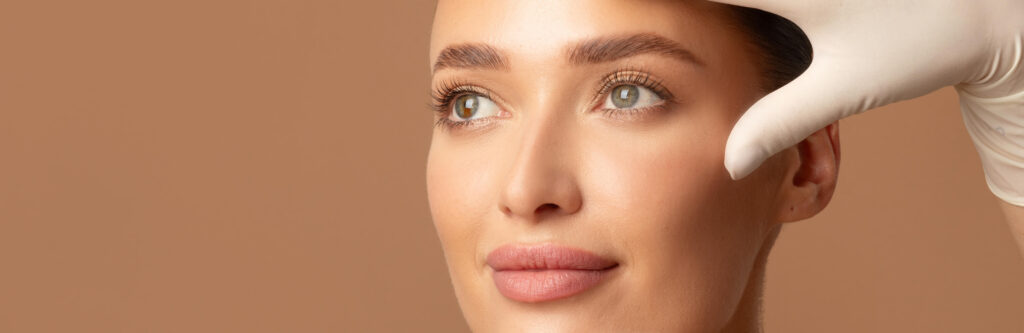
Areas Commonly Treated With Fat Grafting
Facial fat grafting is remarkably versatile. Because fat integrates naturally with your tissue, it can be used in multiple zones across the face to restore structure and soften hollows, all without the stiffness or overcorrection sometimes seen with synthetic fillers.
Some targeted areas for facial fat transfer are:
- Cheeks — Volume loss in the midface can create a sunken or flattened look. Rebuilding cheek structure lifts the face subtly and restores natural contour.
- Temples — Hollow temples can age the face and interrupt the flow between the forehead and cheek. A small amount of fat can smooth and balance this area..
- Under-Eyes/Tear Troughs — Fat transfer can minimize shadowing under the eyes and reduce the look of fatigue by filling the hollows, not stretching the skin.
- Nasolabial Folds — Instead of chasing lines, fat grafting addresses the volume loss around them, offering a smoother transition between the cheeks and mouth.
- Marionette Lines & Jawline — Strategic fat placement can soften lower-face heaviness, create a cleaner jawline, and restore definition near the chin
- Lips — For some patients, fat can be used to restore natural lip volume.
Dr. Basner approaches each fat transfer with an artistic and anatomical mindset, adjusting the volume and placement to match your facial structure and goals. Whether it’s a single concern or multiple areas, his priority is restoring harmony.
What Is Recovery Like?
Recovering after facial fat grafting is quite straightforward, similar in many ways to the recovery period after liposuction. You’ll notice mild swelling or bruising at the donor and injection sites, which will gradually fade over time. You should be able to get back to most activities within a few days and return to full exercise after one to two weeks. Following the post-surgery recommendations we provide will ensure a smoother recovery.
Complementary Procedures
When they decide on facial fat grafting, many Baltimore patients consider additional procedures to help achieve their long-term goals. Combining procedures can also help reduce your recovery time, compared to performing the surgeries separately. Procedures that complement fat grafting include:
- Facelift or mini facelift
- Eyelid surgery (upper/lower blepharoplasty)
- Neck lift
Why Choose Dr. Basner?
When they decide on facial fat grafting, many Baltimore patients consider additional procedures to help achieve their long-term goals. Combining procedures can also help reduce your recovery time, compared to performing the surgeries separately. Procedures that complement fat grafting include:
Baltimore patients seeking facial fat grafting choose Dr. Basner because of his carefully considered approach and natural results. He is a board-certified plastic surgeon and the Chief of Plastic Surgery at Sinai Hospital. Named a Top Doctor by Baltimore Magazine, Dr. Basner is nationally ranked by Newsweek in all six of its categories: breast augmentation, facelift, liposuction, rhinoplasty, abdominoplasty, and eyelid surgery. Patients trust his surgical precision and emphasis on long-term facial harmony.
Book Your Facial Fat Transfer Consultation
If you’re ready to return to a fuller, more youthful experience, Dr. Basner is ready to help. Known for his facial fat grafting throughout Baltimore and Maryland, he will take a careful, conservative approach to your case, considering your goals and your facial structure. Call today or contact us to take advantage of his expertise.
Frequently Asked Questions About Facial Fat Grafting
How long does facial fat grafting last?
The results of facial fat grafting typically last for years.
Will I need touch-ups later?
Fat grafting simply restores your facial balance; it doesn’t stop the process of aging. As a result, you may require some touch-ups years down the road.
What happens if I gain or lose weight after surgery?
Dramatic weight changes after surgery can affect your long-term results. It’s best to be at or near your desired weight before undergoing a facial fat transfer.
Schedule Your No-Obligation Consultation
Fill out the form below to request a consultation or give us a call at 410-616-3000
Articles Related to Facial Fat Grafting

Mini Facelift vs. Full Facelift: Recovery, Results, and Costs Compared
Aging is inevitable, but looking older than you feel? That’s
What Is a Neck Lift and Is It Right for You?
The neck is one of the first places aging shows